


The Art in Nature Program is made possible by the Ronald D. Russo Charitable Fund.
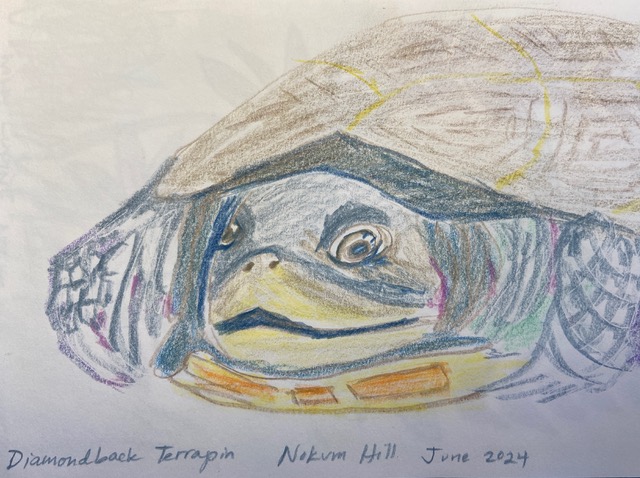 Discover and capture your impressions of the Doug Rayner Wildlife Refuge, an 80-acre coastal preserve, at summertime and high tide, on Saturday, June 6, from 1-3 pm.
Visual and literary artists working in a variety of media are invited to participate. We’ll encourage each other as we explore and document the natural world. Each participant should bring their own journal and pens, pencils, watercolors, easels, camera or whatever supplies fit your practice.
This gathering is focused on the creation of artwork in a natural environment and sharing of ideas and experience among participants. It is not an instructional workshop.
We welcome people of all skill levels, from beginner to professional. Youth under the age of 14 may participate if accompanied by an adult.
Doug Rayner Wildlife Refuge
The Doug Rayner Wildlife Refuge is located on Nockum Hill in Barrington on a peninsula extending into the Barrington River and Hundred Acre Cove estuary. Owned by the Town of Barrington, the Refuge’s public hiking trails traverse more than 70 acres of field, forest and shoreline.
Nockum Hill has figured prominently in Barrington’s history. Once home to the Wampanoag people, it is the site of the first Baptist meetinghouse in the New World. Legend has it that the first shots of King Philip’s War were fired nearby.
The town acquired the land in the 1960s and designated it as a wildlife refuge in 1994. The Barrington Land Conservation Trust was granted a conservation easement on the property in 2005 to ensure the property remains protected in perpetuity. This sensitive land is managed by the Doug Rayner Management Committee in collaboration with the Land Trust.
In 2000, the Refuge was named after ardent naturalist Doug Rayner, a member of the Barrington Conservation Commission and a board member of the Barrington Land Conservation Trust. Doug was instrumental in protecting the marshes and upland buffers of the Palmer and Barrington Rivers, Nockum Hill and Hundred Acre Cove, and was active in protecting endangered species and their habitats.
Long recognized as a property of great natural resource value because of its coastal wetland and habitat, it includes extensive salt marsh, shrub-dominated fields, deciduous forest and farmland. It provides habitat for a wide variety of bird species, including several special interest species such as clapper rail, seaside sparrow and marsh wren.