

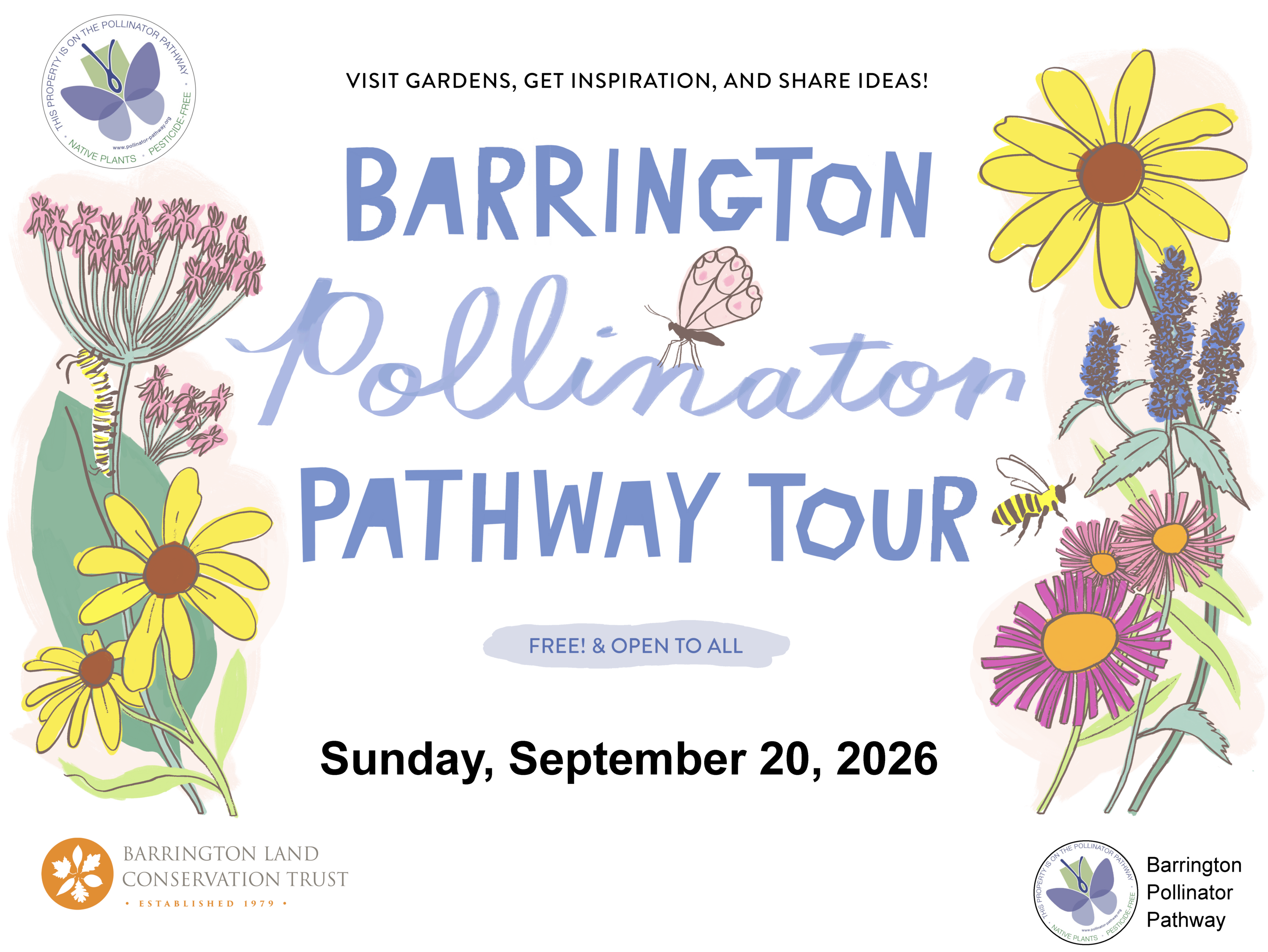
A map of the properties will be available on the day of the event, September 20, when you check in. Pollinator Pathway signs will be available to buy for those who wish to place one in their garden. The cost is $20 per sign. You may purchase one at the event, while supplies last. Cash or check only, please.
Schedule
Noon to 1 pm – Johannis Farm Wildlife Preserve: Check in and pick up a map of tour locations. Purchase a Pollinator Pathway sign for your garden (while supplies last; cash or check only). Johannis Farm is located on Sowams Road in Barrington, RI, between #461 and #475 Sowams Rd. The entrance will be marked with a Land Trust sign.
Noon to 4:30 pm – Visit sites on the tour.
4 pm to 5:30 pm – Tour Johannis Farm Wildlife Preserve and its wildflower meadow. Enjoy refreshments and share information and stories gathered on the tour.
For more information, reach out at pollinatorpathways@blct.org.
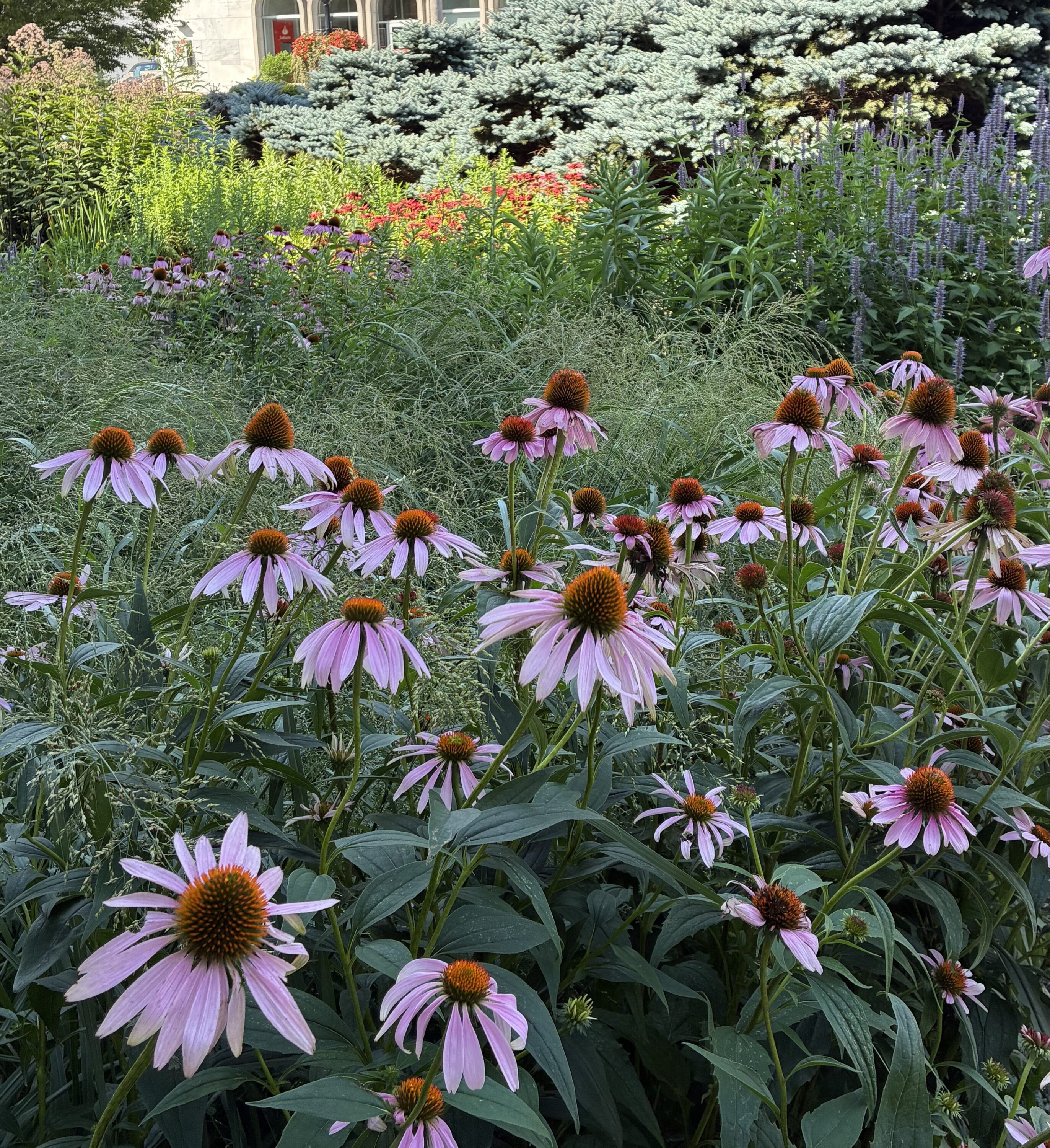
Pollinator Garden at Barrington Town Center
FAQs
1. What is a pollinator pathway?
Pollinator pathways are public and private pesticide-free corridors of native plants that provide nutrition and habitat for pollinating insects and birds. Some pollinators travel several miles to find nutrition, but many travel only a few hundred feet in their lifetime. By connecting our landscapes with habitat that feeds and shelters them, creating a pollinator pathway, we allow for the movement of species across a healthy, native landscape. Even a small garden can be an oasis for pollinators.
These native plant landscapes also promote climate resilience and fight biodiversity loss. Climate-resilient yards not only protect wildlife but also provide natural defenses against heavier rainfalls and extended periods of drought. These landscapes are better equipped to withstand a changing climate. Plants, especially natives, also sequester carbon, filter pollutants from our water, help improve soil health, and provide the oxygen we breathe.
2. Why are pollinators important?
Without pollinators, 85% of the plants on the earth wouldn’t exist. Almost 80% of the crop plants grown around the world that produce our food and plant-based products require pollination by animals. 40% of all insect species are declining globally and a third of them are endangered. Insects play critical roles in pollinating the plants we eat, but they also break down waste in our environments and form the base of the food chain.
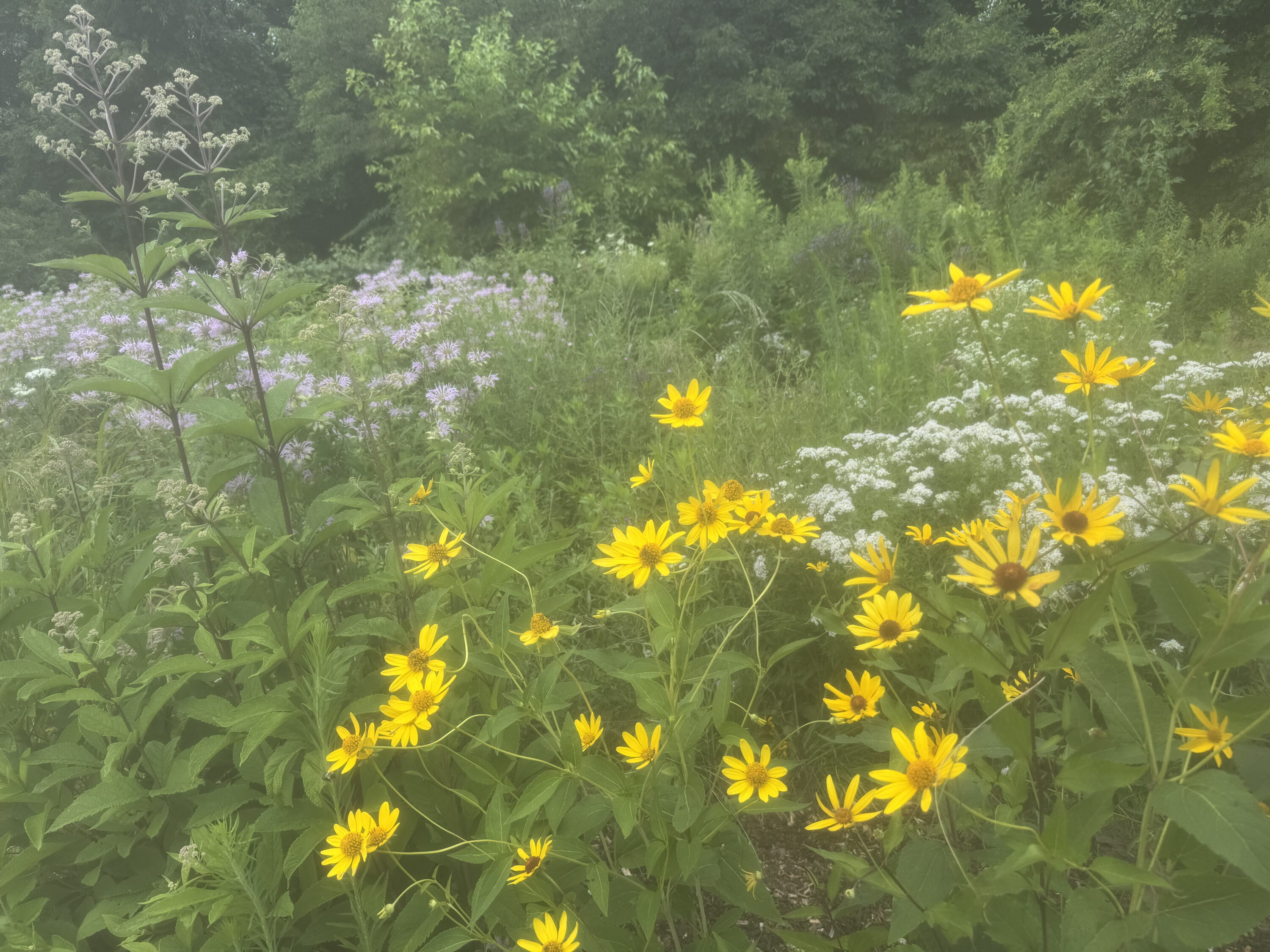
Pollinator Garden at Barrington Middle School
3. How does the tour work?
Check in and map pickup will start at the Johannis Farm Wildlife Preserve at 12:00pm on the day of the tour. Tour site addresses will not be available until September 20. The gardens are mostly in neighborhoods, so please be respectful of neighbors when parking and walking to the sites.
All of the gardens will be open to the public from noon to 4:30 pm. You don’t have to visit all of them, but we hope you will! There will be an informal gathering at the Johannis Farm Wildlife Preserve from 4 pm to 5:30 pm, along with a tour of the preserve and its wildflower meadow. Light refreshments will be served. Participants can ask questions and share experiences with one another.
4. How can I get a Pollinator Pathway sign?
Pollinator Pathway signs will be available for purchase for $20 at the Johannis Farm Wildlife Preserve on the day of the tour for $20, while supplies last (cash or check only).
5. What if it rains?
The tour will take place, rain or shine!
6. What if I have further questions?
Visit the regional Pollinator Pathway, the Native Plant Trust, and the Massachusetts Pollinator Network for more information on ecological gardening.